

We care about your privacy. We attempt to limit our use of cookies to those that help improve our site. By continuing to use this site, you agree to the use of cookies. To learn more about cookies see our Privacy Policy.
FUTURE FORWARD
When A Safari Gives Back
Lemala’s regenerative loop is turning hospitality into preservation infrastructure
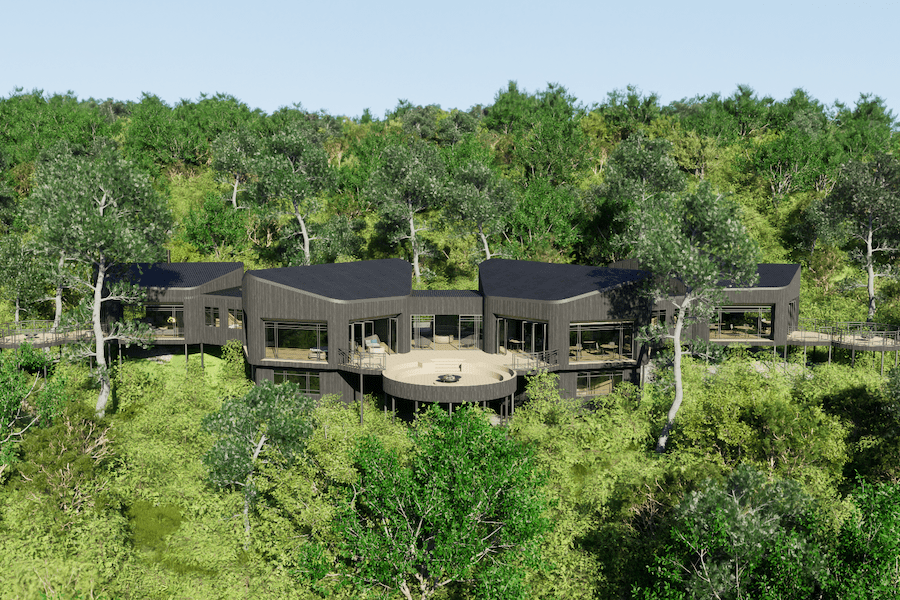
Osonhoi Lodge near Ngorongoro Crater, Tanzania
By AHL on 04.21.26
For over a decade, Lemala Camps & Lodges has been developing its own idea of “regenerative” safari travel across Tanzania and Uganda. At the center is a simple claim: that luxury safari doesn’t have to sit apart from the places it moves through (as in extracting from them), but can be built so that we leave behind impact and a return.
Many modern claims of corporate sustainability are rightfully met with skepticism, but Lemala’s reputation stands out as a testament to visible, long-term work that has built over time. “Our responsibility extends beyond hospitality,” says CEO Leanne Haigh. “We are custodians of these wild spaces, committed to leaving them richer than we found them.” It’s a familiar kind of sentence in this space, but what follows is less abstract. Lemala is more focused on infrastructure than positioning, and operations over promises.
The company’s lodges, intimate villas, and classic tented camps span Tanzania’s Serengeti, Ngorongoro, Tarangire regions and Uganda’s River Nile. Each location is in the heart of the wilderness, providing high-level service and excursions without losing touch with the surrounding environment. They are also internationally awarded for their commitment to social and environmental consciousness. Lemala’s efforts are visible and practical, rather than symbolic: desks and laptops in schools, electricity in classrooms and dormitories, menstrual health programs designed around whether girls stay in school or don’t.
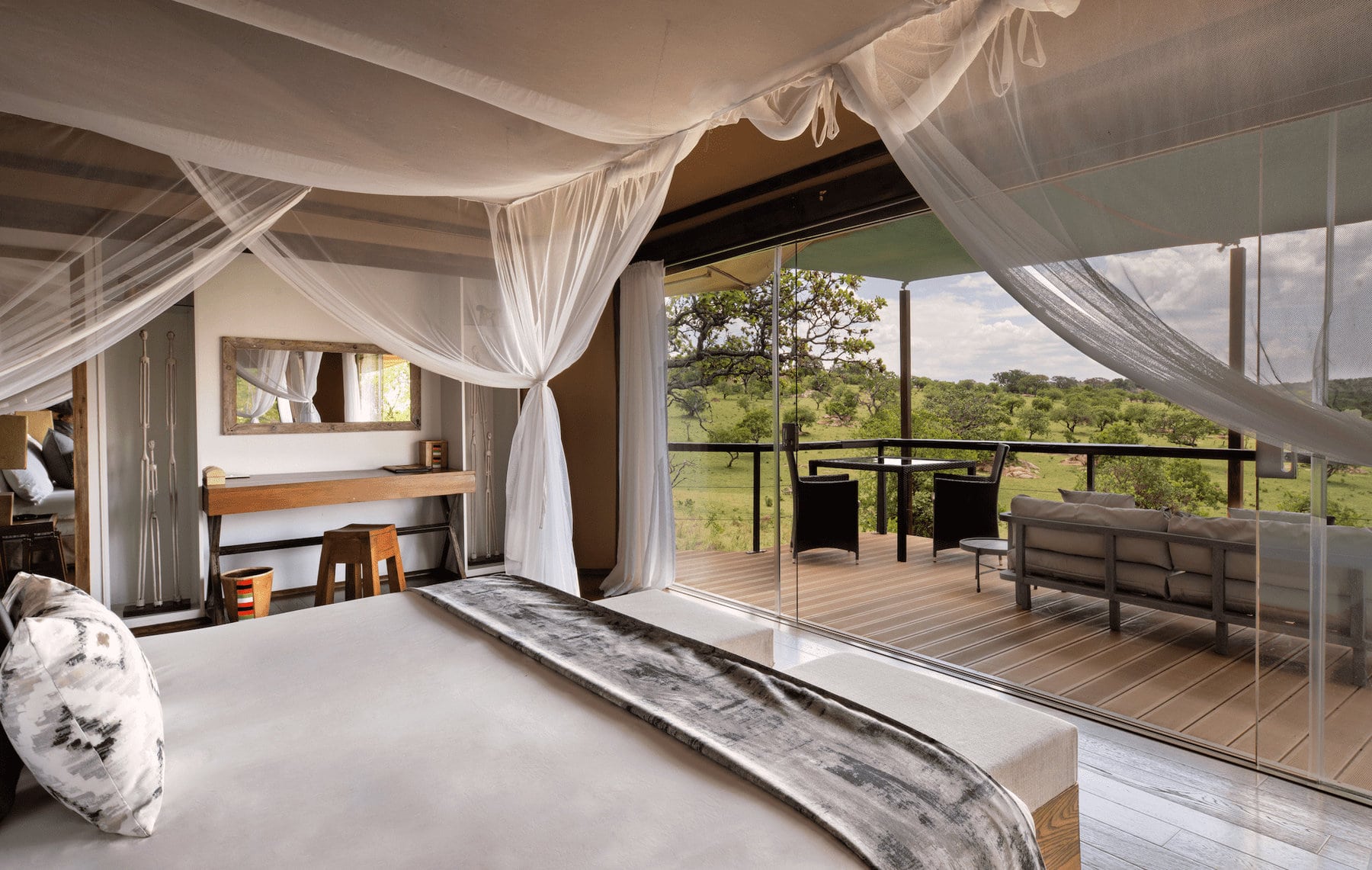
Kuria Hills Lodge, Serengeti, Tanzania
"We are custodians of these wild spaces, committed to leaving them richer than we found them." -Leanne Haigh, Lemala CEO
When it comes to revising the world of hospitality, it starts in the camps themselves. Mobile units are now fully solar, with diesel and wood removed from daily use, and plastic bottled water has disappeared entirely, replaced by on-site reverse osmosis and UV systems that shift water from supply to infrastructure. Plastics are collected and reworked into school desks, furniture, and building materials, with more than 100 tonnes already redirected in this way, while additional streams move through recycling and upcycling partnerships to keep them in circulation rather than ending up in landfills.
Outside the camps, the same logic extends into how money moves. Guest spending is structured so that per-bed contributions, tours, and curio shop sales feed directly into local education, healthcare, and infrastructure, tying the experience back into the surrounding communities in a way that is designed to be continuous rather than episodic. Wildlife work sits inside this same system, with large-scale snare removal across the Serengeti and ongoing animal rescue folded into the operational structure rather than separated from hospitality. Guest fees and curio shop income are directed into education and social programs, so that what is spent is not framed as transaction so much as circulation.
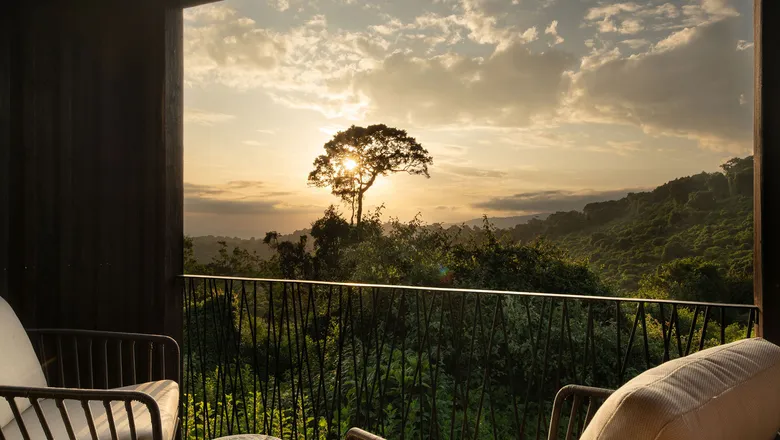
Osonjoi Lodge, Tanzania
A safari stay is no longer just something that happens to the landscape and people
The full circle includes local artist and craft practice: Ugandan painter Angelo Edrine Wasike at Wildwaters, Tanzanian artist David Msia at Osonjoi, and local craftspeople behind beaded curtains, woven carpets, and thorn pendant lights are brought in to stay in the lodges where their work is installed, seeing it in place rather than removed from context.
The same logic extends into sourcing: over 90% of curio shop goods are locally made, supporting groups such as Sanaa, Kenana Knitters, and Maasai women’s Kiretono projects. (There is a strict avoidance of endangered species products.) Even small systems like Green Lunch Boxes, made from banana leaves and run since 2018, sit inside the same structure of local income and reuse.
An approach like this one ultimately presents not just a collection of initiatives, but a full framework of operations across energy, water, waste, labor, wildlife, and money flow, designed to keep moving through the same places it passes through. And the underlying claim is simple: that a safari stay is no longer just something that happens to the landscape and people, but something that continues to circulate through them after you leave.
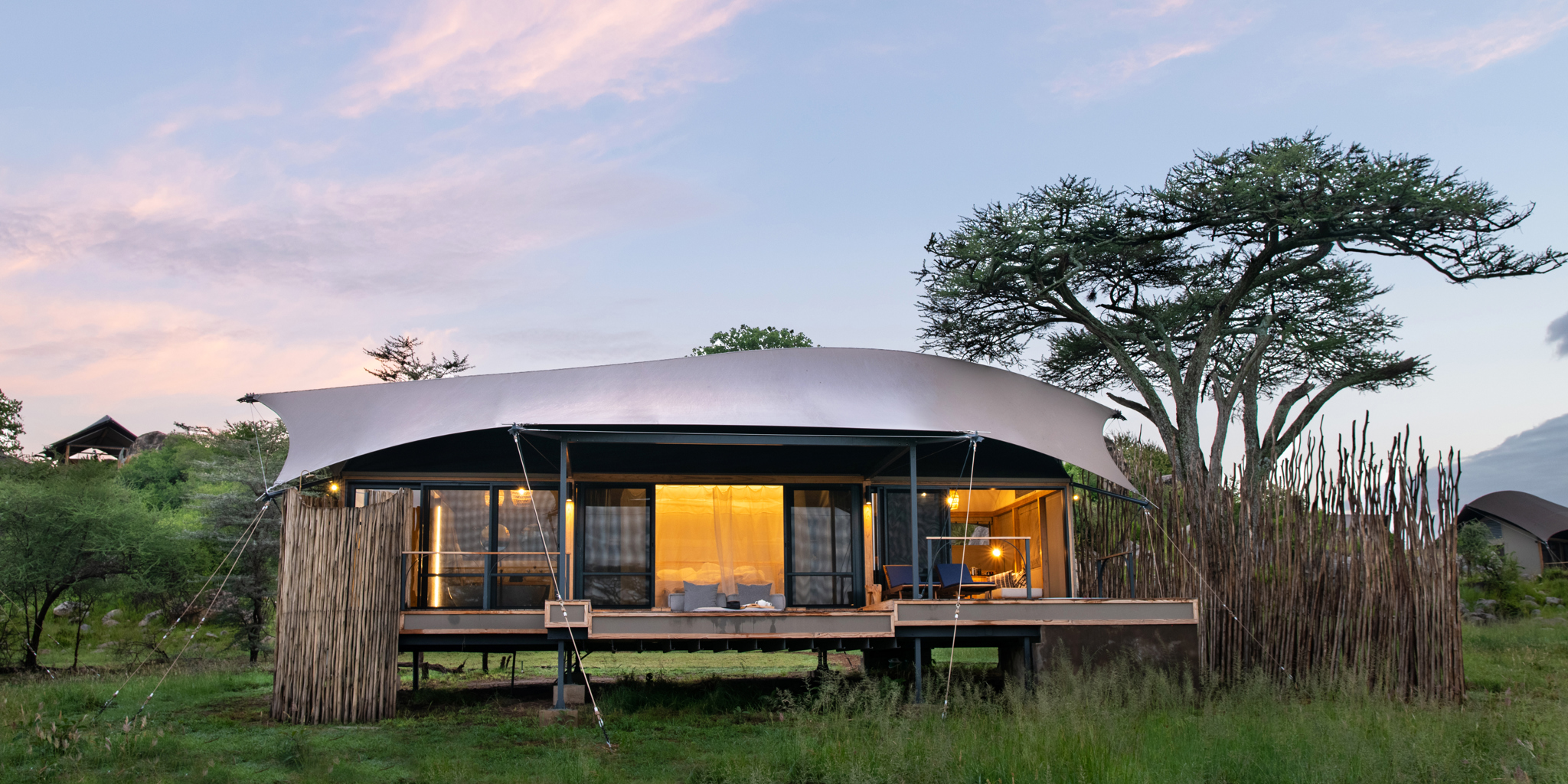
Serengeti, Tanzania
Share this Story
More Future Forward

AI Can Book the Trip. It Can’t Take It For You
Hospitality just became the safest job in tech's path, and not by accident
tell me more ›
Who’s Answering After Midnight
Guests want human attention. So where did all the people go?
tell me more ›
Where the Artists Go: Under the Radar Spots in Six Storied Creative Colonies
Our favorite stays in bohemian enclaves from coast to coast
tell me more ›